IMPORTANT NOTICE! ALWAYS CHECK YOUR EMAIL FOR THE DOWNLOAD LINK TO YOUR PLAN AFTER COMPLETING A PURCHASE.
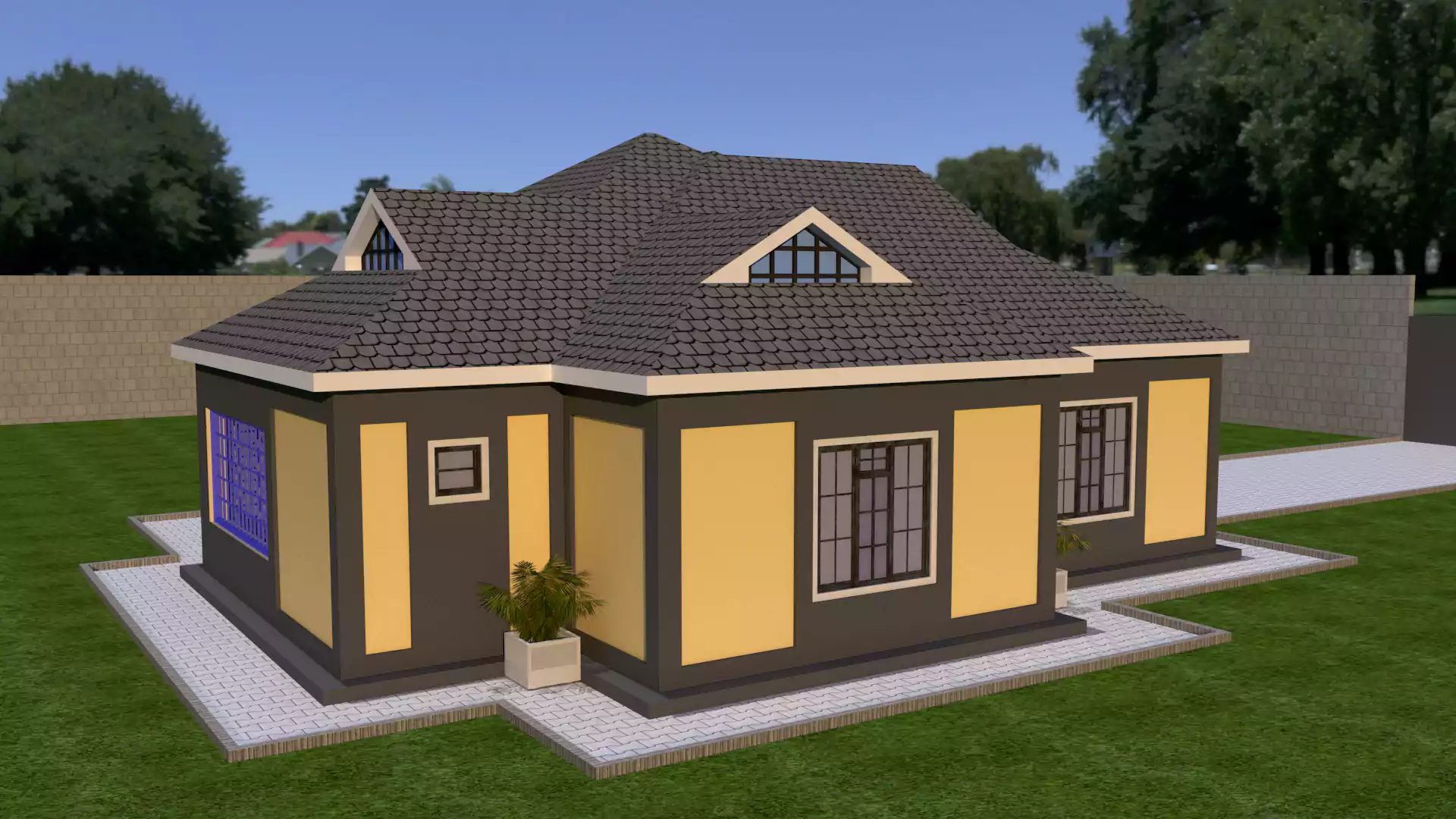
Top 10 Roof Designs in Kenya, Roofing materials and Their Prices in 2026.
The most common roof designs in Kenya include:
Skillion roof, Pyramid hip roof, Hip roof, Hip and valley roof, Gable roof, Dutch gable roof, Butterfly roof, Hidden roof, Flat roof and Dormer roofs.
The most common roofing materials in Kenya are:
Corrugated iron sheets (Mabati), Stone coated steel tiles and Asphalt shingles.
Roofing materials in Kenya differ in price due to factors such as:
Material type and quality, Gauge (thickness), Coating and finishing and roof design complexity
We now take a deeper look into the different roof designs, materials and price comparisons in Kenya 2026;
Top 10 Common Roof designs in Kenya 2026
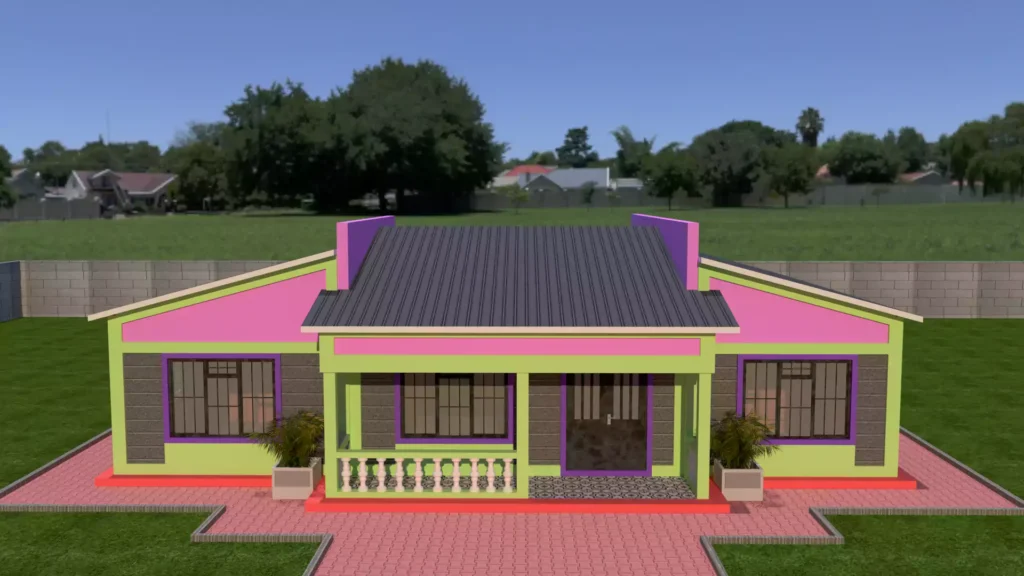
1. Skillion Roof
A skillion roof exhibits a significant pitch compared to a flat roof. Homeowners may lean toward a skillion roof design for the ease and low cost of construction and materials. The lifespan of a skillion roof design is longer than a standard flat roof and requires low maintenance.
Why a skillion roof is an excellent option for your housing project;
- Facilitates excellent water runoff, ideal for areas with heavy rainfall.
- Energy efficient since they allow solar panel installation and maximize natural light penetration.
- Simple and easy to construct, helping with cost savings and suitable for budget-conscious projects.
- Modern appeal and aesthetics.
- Easy to maintain compared to roofs with multiple slopes and complex angles.
2. Pyramid Hip Roof
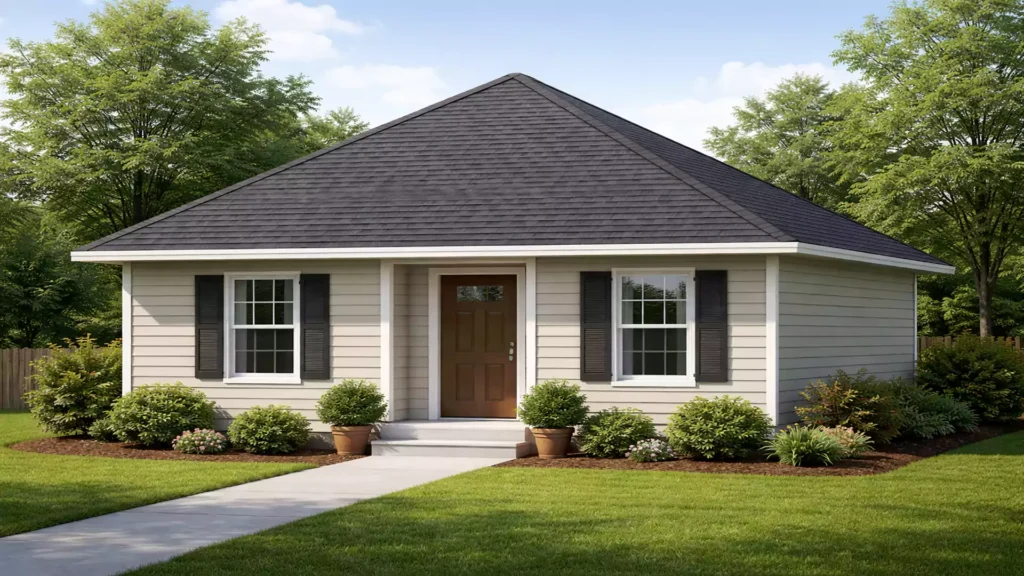
A pyramid hip roof is a four-sided roof style where all slopes meet at a single, central peak.
It is designed for square layouts such as sheds and gazebos.
The main difference between a standard hip roof and a pyramid hip roof is that, a standard hip roof has four slopping sides that meet at a central ridge, generally used on rectangular buildings. Standard hip roofs are most suited for rectangular layouts while pyramid hip roofs are suited for square, symmetrical buildings.
Why a pyramid hip roof could be an excellent option for your housing project;
- Pyramid hip roofs can withstand adverse weather conditions like strong wind and rain.
- They provide more attic space and promote water and snow runoff due to the steep slope.
- Easy to install a gutter system on all the four sides of the roof.
- Pyramid roofs offer an appealing appearance because of their classic style. Their symmetry and orderliness make them aesthetically pleasing.
- Pyramid roofs have natural insulation since they have eaves on all sides. This keeps the temperature inside low.
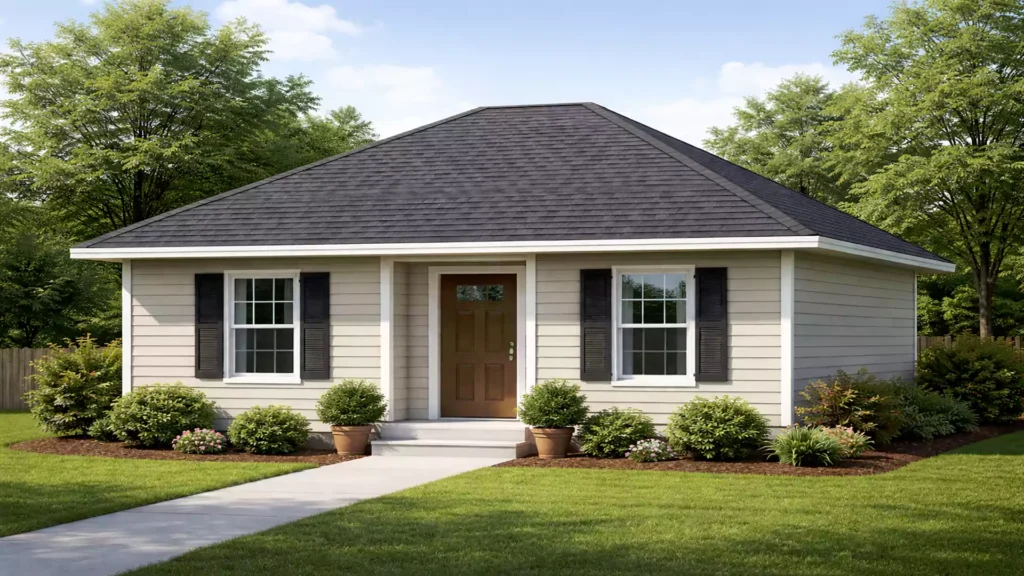
Asphalt shingles, metal roofing or Mabati and specialized materials like polycarbonate are the most common roofing materials for pyramid roofs.
3. Hip roof
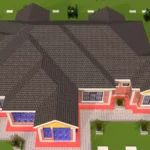
A hip roof has all four sides of the roof slope downward from the peak. Hip roofs are popular on houses in suburban and rural areas because they are easy to build and do not require much technical knowhow. In Kenya, they are mostly used on semi-permanent and even permanent structures, with corrugated and box profile iron sheets being the main roofing material used. They are a good option for houses with a rectangular layout.
Why a hip roof could be an excellent option for your housing project;
- Excellent drainage and weather resistance.
- Aesthetic and functional versatility with a balanced appearance,
- Enhanced stability and durability against heavy and wind-driven pressure.
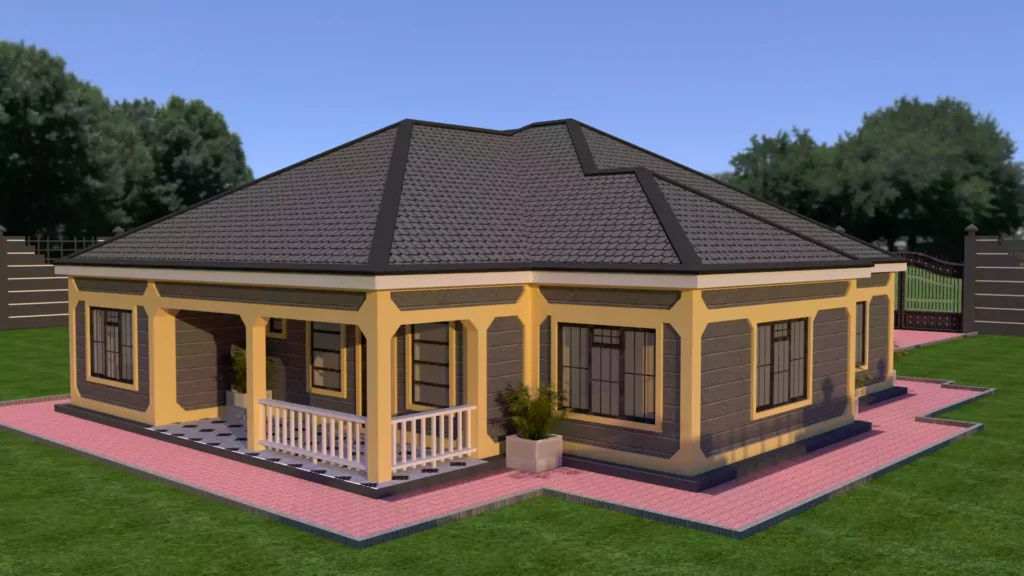
4. Hip and valley roof
A hip and valley roof has multiple hip roofs connecting. To understand a hip and valley roof, you first need to understand a hip roof, which has all four sides sloping downward from the peak but with no valleys.
A valley of a roof is a V-shaped intersection where two sloping roof surfaces meet. It acts as a primary drainage channel that collects and funnels water off the roof into gutters.
Valleys are high-stress parts due to the high amounts of water they handle; hence they require waterproofing with metal flashing.
The hip of a roof is the point where two sloping sides meet.
The main difference between a standard hip roof and a hip and valley roof is that a hip roof is ideal for simple square or rectangular building layouts, while a hip and valley roof is designed for complex L-shaped or T-shaped building layouts.
The hip and valley roof can be described as a hybrid that combines multiple hip roof sections, resulting in valleys where different roof planes intersect.
Why a hip and valley roof could be an excellent option for your housing project;
- Hip roofs have an aesthetically pleasing look.
- They offer an improved gutter system since gutters can be installed on all four sides, ensuring maximum rainwater management.
- They can withstand harsh conditions such as heavy rainfall and strong winds.
- They offer a spacious attic space.
- Common materials used in hip and valley roofing include metal sheets (steel, aluminum, copper), asphalt shingles, and concrete or clay tiles.
5. Gable roof
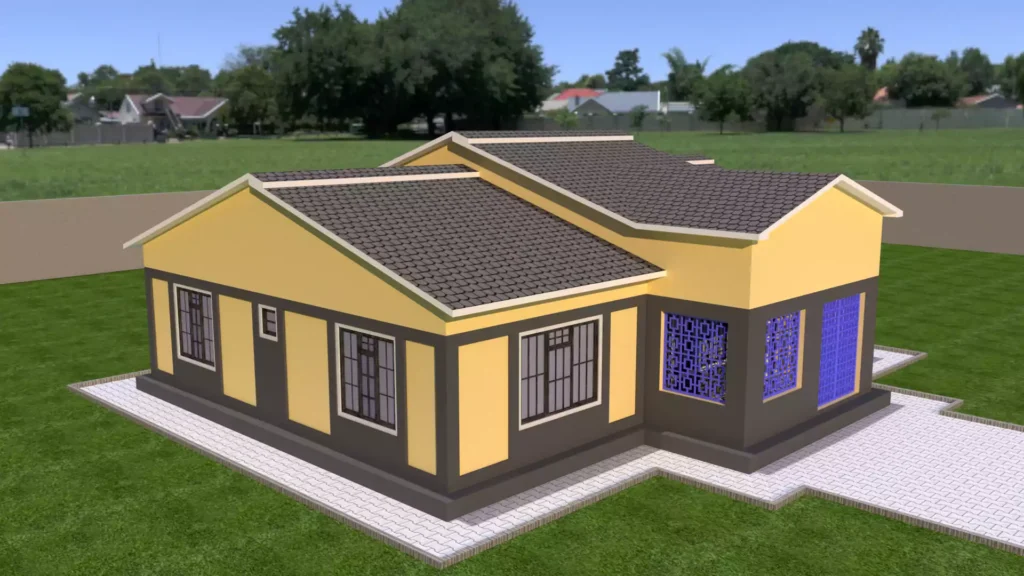
A gable roof features two sloping sides that meet at a central ridge, creating an inverted V. The pitch of a gable roof can vary greatly.
In regions with heavy rains and strong winds, gable roofs are built with a steep pitch to prevent water leakage. The sloping sides form end walls with a triangular extension known as a gable.
Common materials use in gabled roofing are; iron sheets, asphalt shingles, stone-coated steel tiles, clay and concrete tiles.
Why a gable roof could be an excellent option for your housing project;
- They offer timeless aesthetics especially with their symmetrical appearance.
- Due to the sloping design, they offer efficient water drainage reducing the risk of water logging. The slope also helps get rid of debris like fallen leaves, making it a perfect option for an area with trees.
- Building a gable roof requires relatively fewer materials and labor hence they are cost-effective.
- They are versatile and can be tailored to fit various home designs.
6. Dutch gable roof
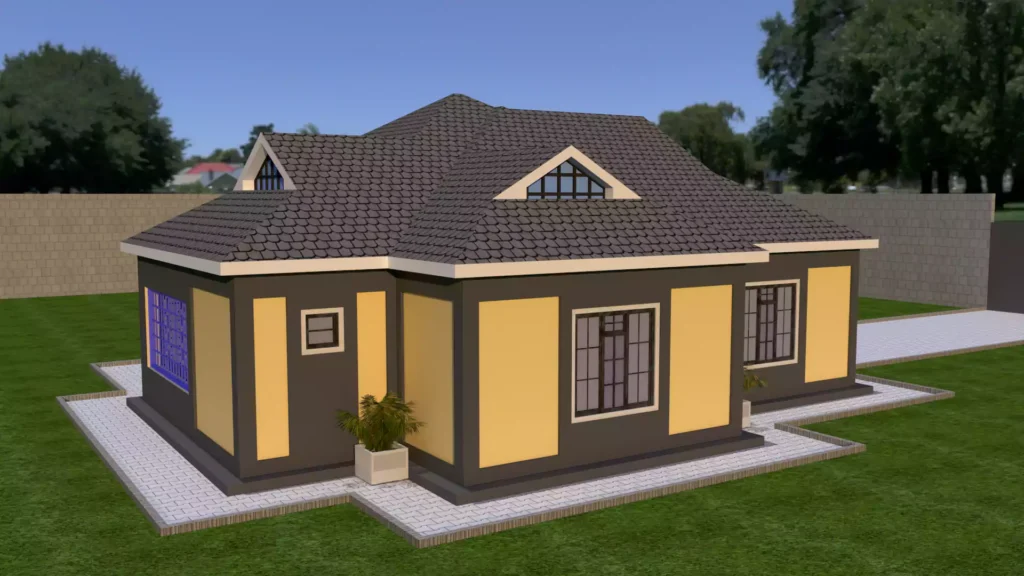
A Dutch gable roof combines both the gable and hip roof architecture. Dutch gable roofs are common in Kenya in both rural and urban areas and are popular due to their aesthetic appeal. The structure starts with a hip roof and incorporates a small gable section at each end.
Why a Dutch gable roof could be an excellent option for your housing project;
- Unique and aesthetically appealing.
- Better ventilation and more attic space.
- Works well with traditional and modern home styles.
- Handles severe weather conditions exceptionally well.
- Can be constructed using shingles, tiles, and metal roofing.
- Design angle can be adjusted to meet specific building and location needs.
7. Butterfly roof
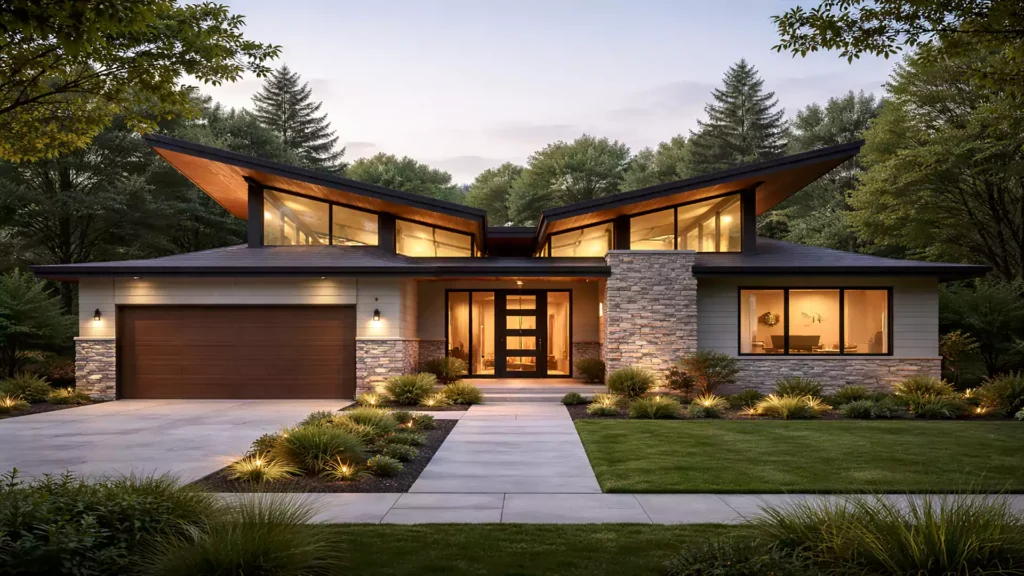
- A butterfly roof (V-roof) is an inverted gable roof.
- The two surfaces slope down from opposite edges to a central valley resembling butterfly wings.
- The roof form has no gutter and it may be symmetrical with the valley located in the center or asymmetrical with an off-center valley.
- The roof form also favors placement of clerestory windows which are high-placed windows located near the roofline. They are designed to allow penetration of maximum natural light and enhance privacy. They also help with ventilation.
- The most common angle of inclination used for butterfly roofs is between 15°–30°.
- Butterfly roofs offer a unique, modern aesthetic design.
- The V-shape enhances superior water harvesting through the central valley drainage.
- Their design provides exceptional wind resistance and offers a good surface for solar panel installation.
- The main difference between a butterfly roof and a gable roof is that butterfly roofs have inward sloping planes forming a central valley whereas gable roofs have two outward sloping planes forming a peak.
- A butterfly roof features a V-shaped design while a gable roof displays an inverted-V design.
- Asphalt shingles, metal and concrete tiles are common roofing materials for butterfly roofs.
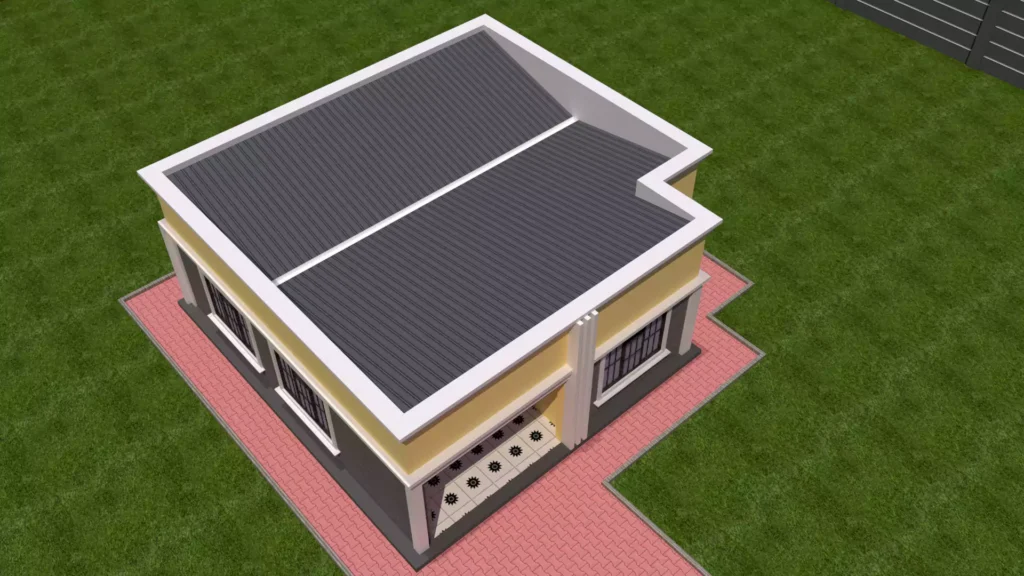
8. Hidden roof
A hidden roof has the roofing material concealed behind parapet walls. It is typically not visible from the ground.
The main difference between a hidden roof and a flat roof is that hidden roofs are concealed and not visible from the elevation view, while flat roofs have the roof covering visible from the ground and have a very low slope (0°–10°).
Why a hidden roof could be an excellent option for your housing project;
- Offers a modern and minimalist aesthetic.
- Cheaper to construct compared to pitched roofs due to lower material and labour demand.
- Offers more usable space due to its flat nature, ideal for solar panel installation.
- Better protected from harsh elements like strong winds because of raised parapet walls.
Metal sheets (Mabati) are commonly used as roofing material for hidden roofs in Kenya.
9. Flat roof
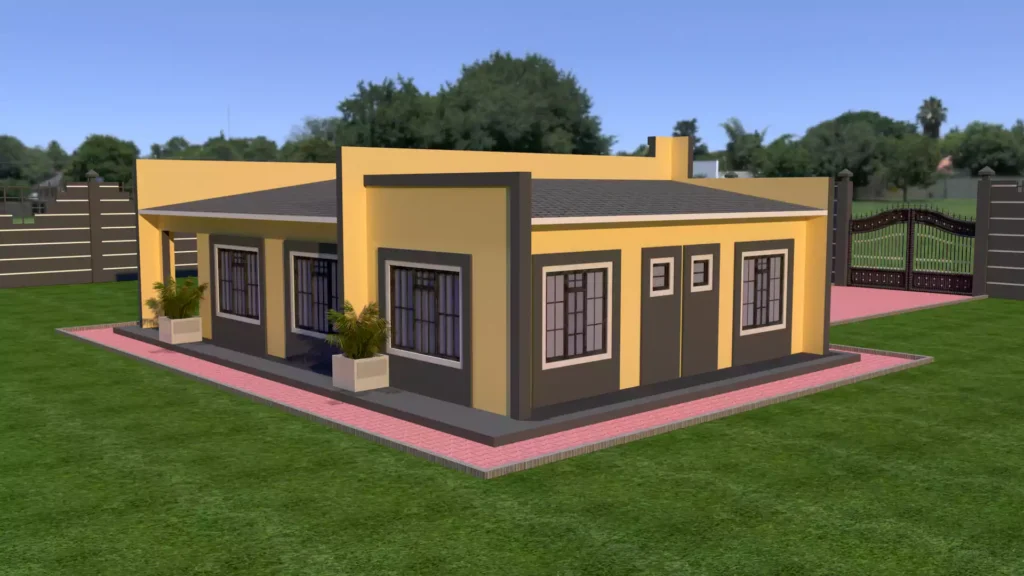
A flat roof is almost level, with only a slight slope for drainage. Flat roofs have approximately up to a 10° pitch,
Why a flat roof could be an excellent option for your housing project;
- Affordable and cost-effective. Flat roofs do not consume a lot of material due to their relatively flat slope, and fewer workers are needed because of the simple design.
- Ease of Maintenance and Access. Flat roofs allow homeowners to climb with ease to the rooftop without much hustle and risks involved. This helps with inspection, maintenance and minimizes the risk of accidents compared to highly pitched roofs.
The most common roofing materials used in flat roofs in Kenya are the corrugated and box profile iron sheets (Mabati).
10. Dormer roof
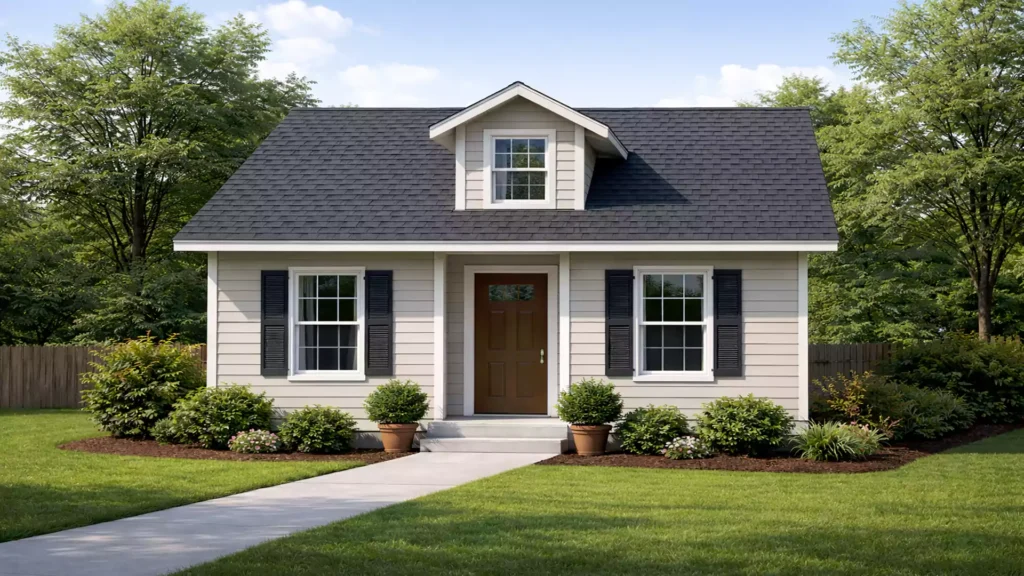
- A dormer roof features a window and its own roofline to add valuable headroom, floor space, natural light and ventilation to attic or upper floors.
- The roofline of the dormer blends into the existing roof structure.
- They offer aesthetic contributions to the home by adding architectural interest, breaking up large roof planes and giving the exterior a more balanced, dynamic look.
- Dormer roofs add a significant amount of space and ventilation to inside rooms such as bathrooms, bedrooms and living areas.
- Metal sheets and asphalt shingles are common roofing materials for dormer roofs.
Common roofing materials in Kenya (2026) and their prices
1. Iron sheets (Mabati)
Iron sheets are the most common roofing material for most homes in Kenya.
They are lightweight, durable and weather-resistant roofing materials made from galvanized steel, aluminium or coated metal.
They are available in standard lengths which are 2 meters, 2.5 meters and 3 meters. Width generally covers 750mm to 1 meter. Some manufacturers allow customization of up to 12 meters depending on the customer’s preference.
They are available in different gauges which indicate the thickness. A lower gauge number indicates a thicker, stronger sheet.
| Gauge | Thickness | Use/description |
| 32 gauge (32G) | Approximately 0.28mm | Very light, often used for temporary structures. |
| 30 gauge (30G) | Approximately 0.25mm–0.31mm | Good for basic structures and low-cost housing. |
| 28 gauge (28G) | Approximately 0.32mm–0.36mm | Standard choice for residential homes due to its affordability, balance and strength. |
| 26 gauge (26G) | Approximately 0.40mm–0.45mm | A strong option for commercial buildings and heavy rainfall areas. |
| 24 gauge (24G) | Approximately 0.50mm–0.55mm | An ideal choice for industrial use or low-slope roofs. |
Roofing sheets with a thicker gauge withstand harsh conditions like wind better. They also have better durability and maintain their shape under pressure better.
The gauge you choose depends on the nature of the development that you intend to build.
Popular companies known in Kenya for manufacturing and supplying high-quality roofing Mabati) include;
- Mabati Rolling Mills (MRM).
- Royal Mabati Factory.
- Maisha Mabati Mills.
- Ursa Mabati.
- Imarisha Mabati Limited.
- Boma Mabati Factory.
- Ruiru Mabati Factory.
- Rafiki Roofing Mabati.
- Rhino mabati factory.
- Alfa mabati factory.
Gauge 28 and 30 are the most commonly used for roofing in Kenya.
The most common types of Mabati in Kenya are;
| Mabati type | Description | Image |
| Corrugated Mabati | Feature classic wavy ridges. | 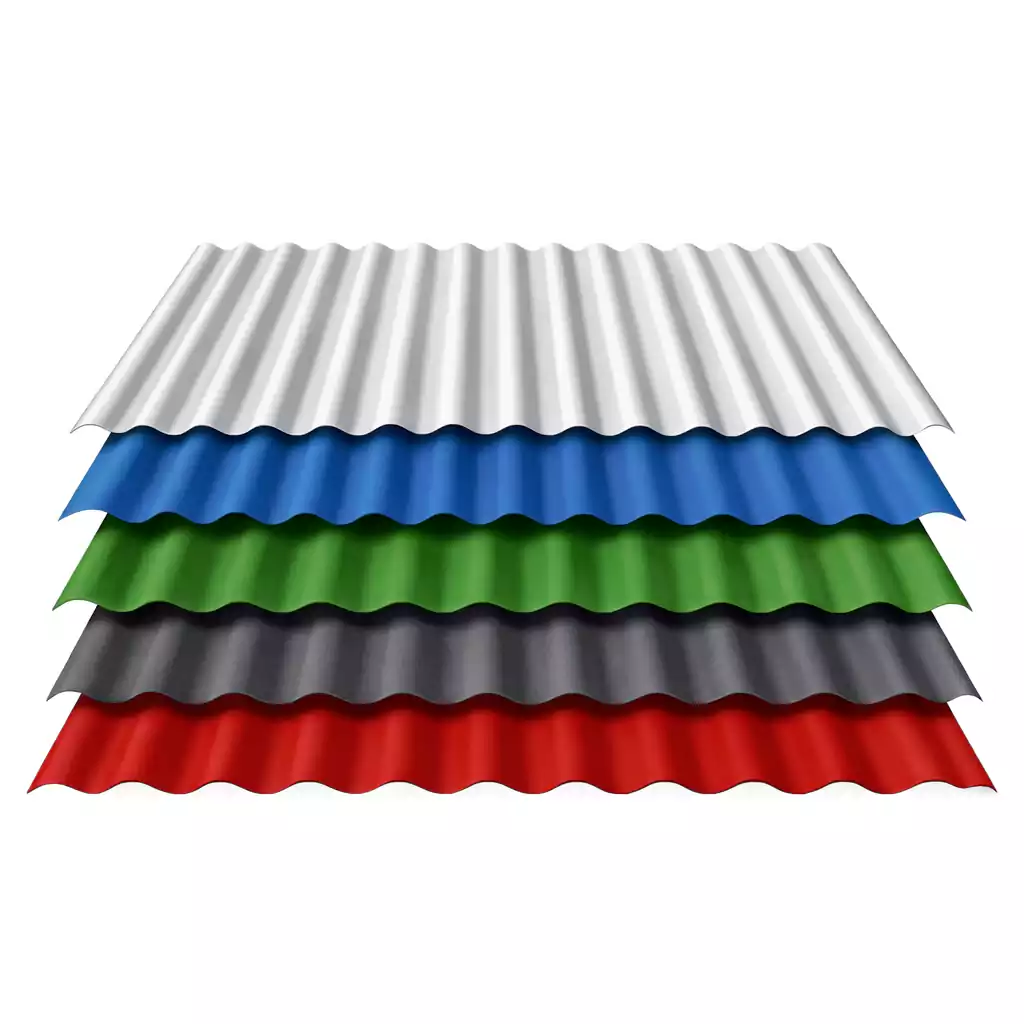 |
| Box profile Mabati | have wider ridges and better aesthetics. | 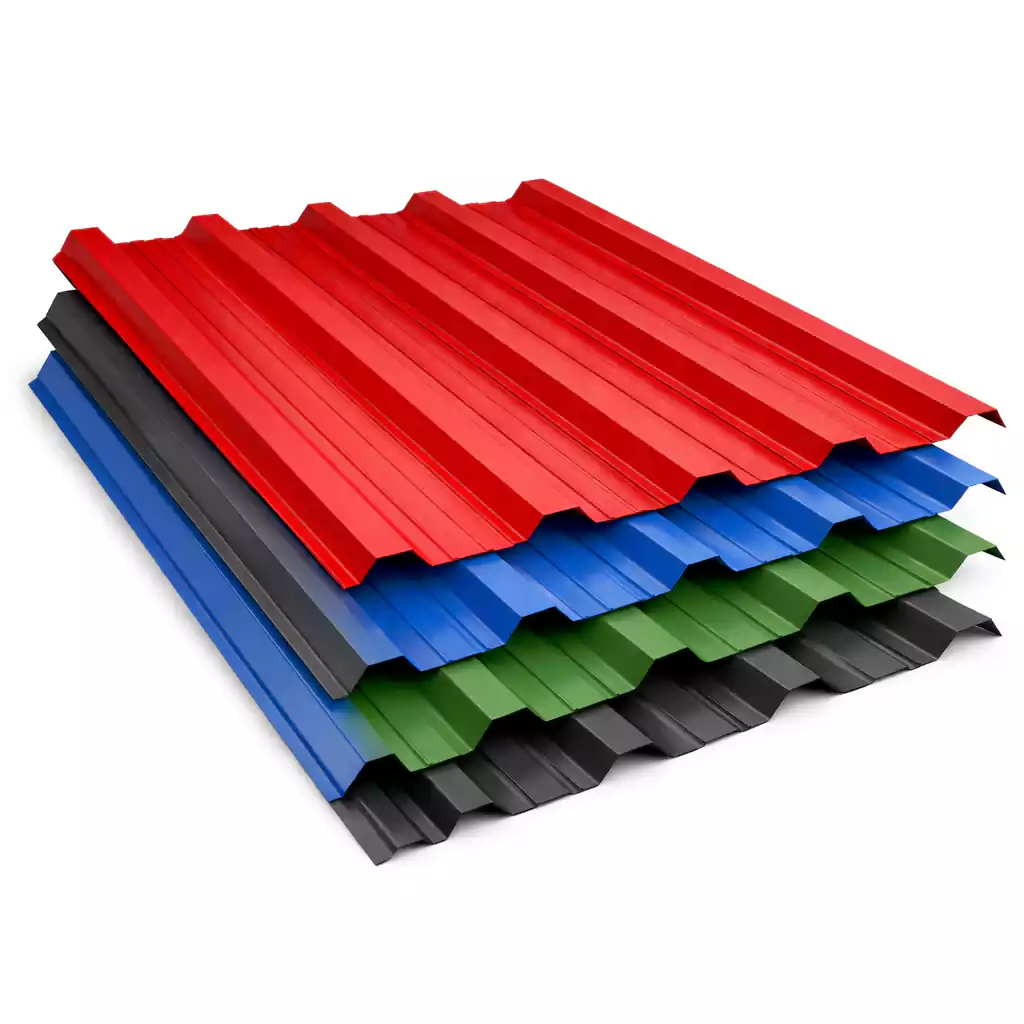 |
| Tile profile Mabati | designed to resemble ceramic tiles e.g. Brickmax, Romax, Z-max, Euromax, Versatile etc. | 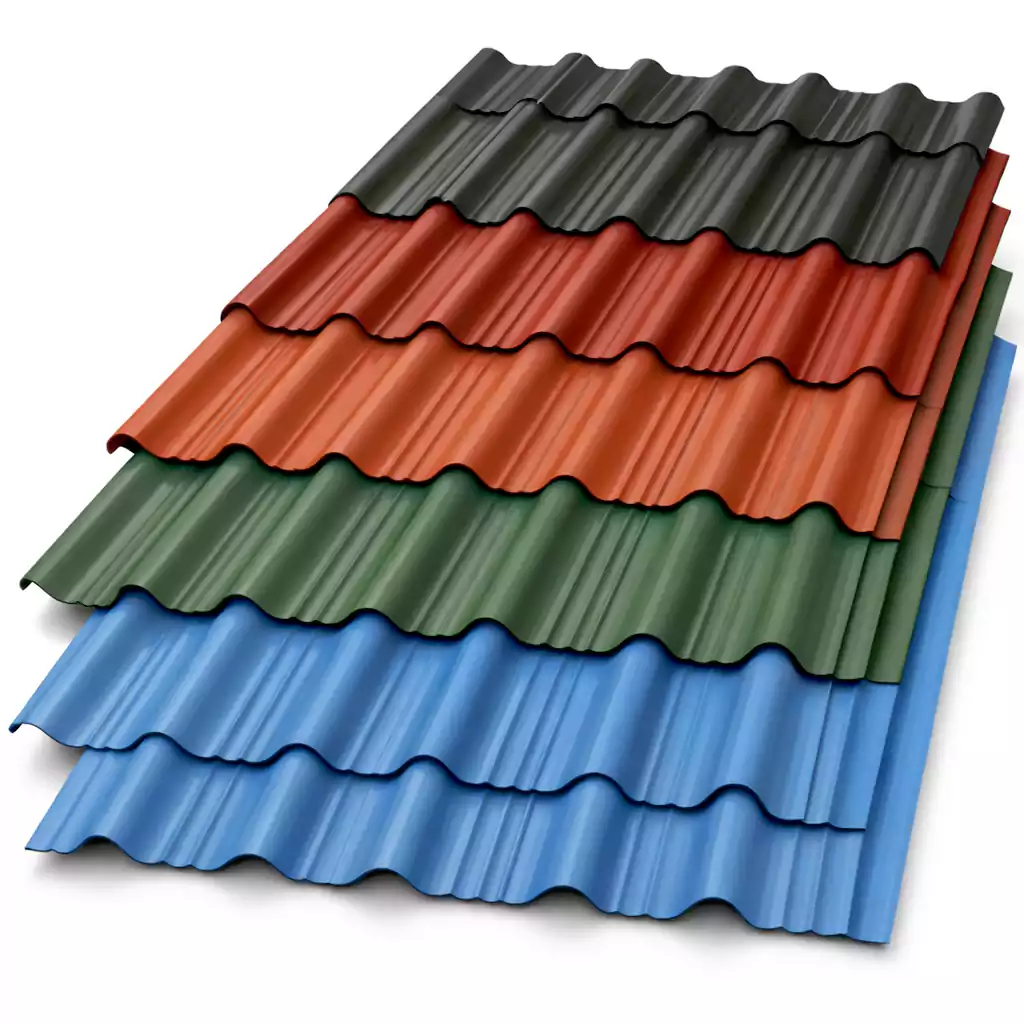 |
Some iron sheets are colored and textured. They are coated with various finishes and colors for durability and visual appeal. Some come with stone coated or matte finishes.
Prices of different Mabati (focus on gauge 28 and 30)
| Type/Name | gauge | Price (per meter) | Mabati company |
| Corrugated, dumuzas unpainted. | 30 G | Ksh 461.68 | Mabati rolling mills |
| Corrugated, dumurangi painted. (Red, Green, Blue, Grey, Brick red) | 30 G | Ksh 494.51 | Mabati Rolling Mills |
| Corrugated, resincot painted. (Red, Blue, Maroon, Green, Charcoal smooth) | 30 G | KSh 521.79 | Mabati Rolling Mills |
| Box Profile, painted. (Blue, charcoal grey, Maasai red, Tile red, Brick red, Green) | 28 G | KSh 730 | Ursa Mabati |
| Box Profile, painted. (Blue, charcoal grey, Maasai red, Tile red, Brick red, Green) | 30 G | Ksh 500 | Ursa Mabati |
| Box profile, Matte finish. (Blue, Charcoal grey, Maasai red, Tile red) | 28 G | Ksh 700 | Ursa Mabati |
| Box profile, Matte finish. (Blue, Charcoal grey, Maasai red, Tile red) | 30 G | Ksh 600 | Ursa Mabati |
| Tile Profile (Versatile) (Charcoal smooth, Red smooth, Maroon smooth) | 28 G | Ksh 842.37 | Mabati Rolling Mills |
| Tile Profile (Versatile) (Charcoal textured, Red textured, Maroon textured) | 28 G | Ksh 958.32 | Mabati Rolling Mills |
| Tile Profile (Roman Tile) (Charcoal grey, Chocolate, Brick red, Tile red, Jungle green, Ocean blue) | 28 G | Ksh 750 | Mabati yetu factory |
| Tile Profile (Roman Tile) (Charcoal grey, Chocolate, Brick red, Tile red, Jungle green, Ocean blue) | 30 G | Ksh 650 | Mabati yetu factory |
| Tile Profile (orientile) (Charcoal textured, Red textured, Maroon textured, Chocolate textured) | 28 G | Ksh 958.32 | Mabati Rolling Mills |
A smooth (glossy) finish on Mabati features a shiny, reflective paint.
A Matte finish offers a dull, non-shiny and non-reflective modern look.
A textured finish can feature stone-coated or specialized textured matte coatings.
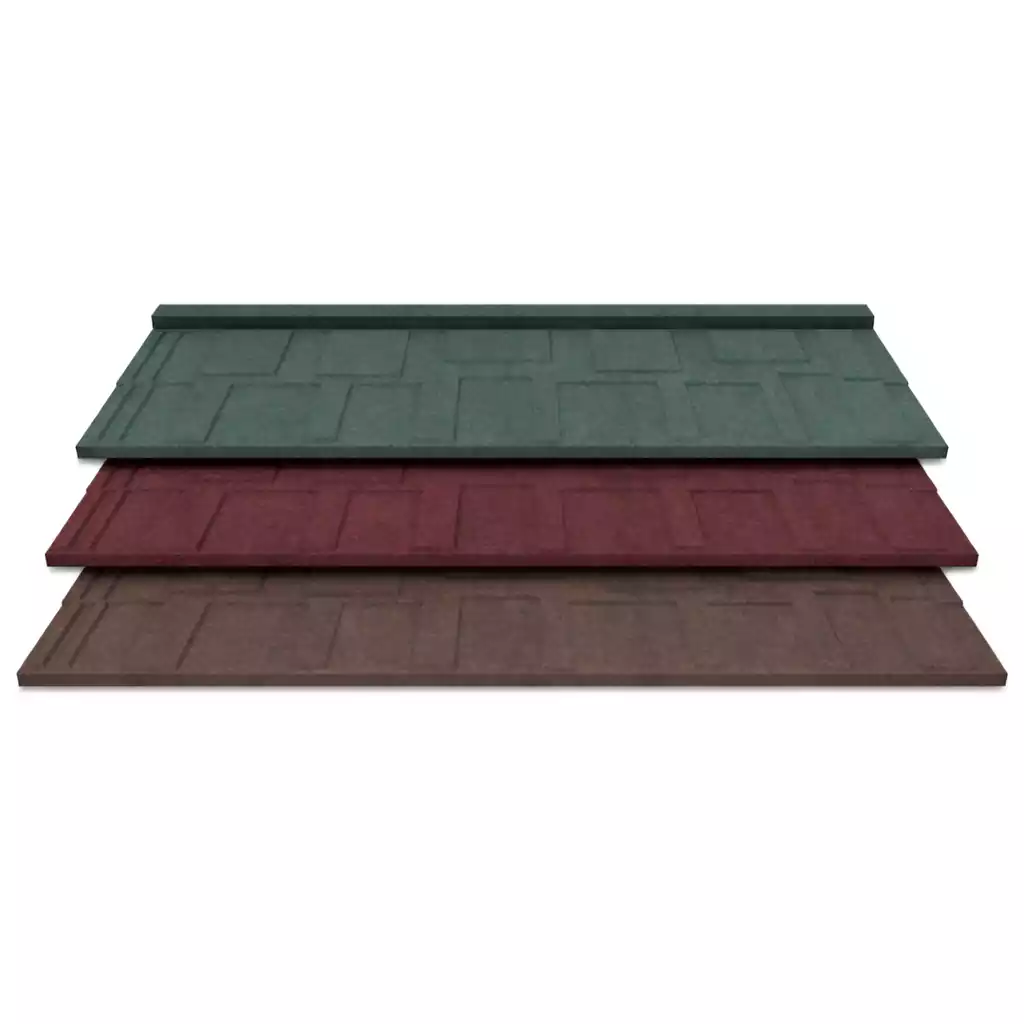
2. Asphalt shingles.
Asphalt shingles, also known as bituminous shingles, are gaining popularity in Kenya due to their durability, aesthetic appeal and suitability for different architectural styles.
They are composed of fiberglass or organic mat coated with asphalt and mineral granules.
They offer durability of 10–30+ years and are noise and fire resistant.
They are a good option for both residential and commercial buildings.
The base mat, usually made of fiberglass, provides strength and flexibility. Asphalt adds waterproofing properties and the ceramic-coated granules provide UV protection, add colour and increase durability.
The shingles can be installed by nailing or bonded in bituminous membrane.
Asphalt shingles have prices ranging from roughly KSh 1,600 per square meter depending on the type and quality.
They also come in different colours such as black, grey, green and red.
3. Stone-coated roof tiles
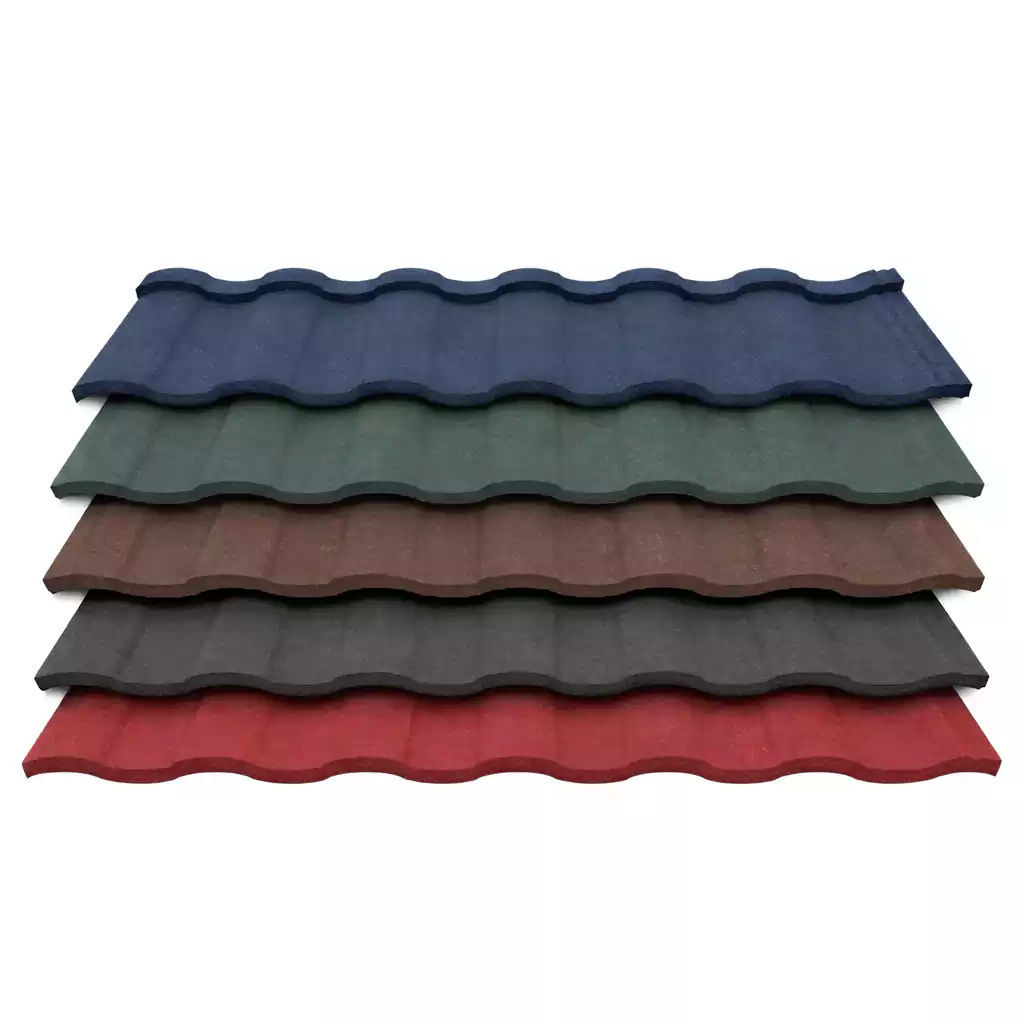
They are made from high-grade alu-zinc steel and coated with natural stone chips.
The tile sizes are approximately 1350 x 415mm (cover 0.56 square meter).
The stone chips are bonded to the metal sheet using an acrylic resin which creates a strong bond.
Stone coated tiles offer aesthetic appeal, durability and weather resistance.
They are also referred to as Decra-style roofing tiles.
The prices start at KSh 700 per piece on Mabati Yetu.
The available colours include charcoal, brick red, tile red, grey, brown, green and blue.
They are a lightweight, fire resistant and durable choice.
They weigh averagely at 2.5kg per tile.
They are wind and hail resistant and their installation features a simple interlocking system with concealed clips.
The approximate number of tiles needed per square meter is 2.
The installation cost per square meter averages at KSh 2,500–3,500.
Final thoughts
Choosing the right roof design and roofing material is one of the most important decisions when building a home in Kenya.
Roofing materials in Kenya also vary widely in cost, durability, and appearance. From affordable mabati iron sheets to premium stone-coated steel tiles and clay tiles, the best choice depends on your budget, climate conditions, and the overall design of your house.
When selecting mabati, it is also important to pay attention to the gauge (thickness). Lower gauge sheets such as gauge 28 or 30 are thicker, stronger, and more durable, making them ideal for long-term residential roofing. Higher gauge sheets like gauge 32 are lighter and cheaper but may not last as long, especially in areas with strong winds or heavy rainfall. Understanding mabati gauges helps homeowners make better decisions based on both cost and durability.
As roofing prices continue to change in 2026, homeowners are encouraged to compare materials carefully, consider long-term performance, and consult qualified roofing professionals before making a final decision.
A well-chosen roof not only protects your home but also enhances its value, beauty, and comfort for many years to come.
At Nyumba Designs, we understand that the roof is more than just a covering. It is a key part of the overall house design. That’s why we help homeowners choose the right house layout, select a roof style that best complements that layout, and provide guidance on the most suitable roofing materials based on budget, durability, and local weather conditions. Whether you are building a simple family home or a modern architectural design, Nyumba Designs is here to support you in making informed roofing decisions that add value and beauty to your home.